

The short answer
Duct cleaning helps when there is real debris inside the ducts: after construction or renovation, after pests, or when dust visibly builds up inside the registers. It does not fix leaks, crushed runs or poor airflow. Check the ducts first, then clean if the inside is actually dirty.
Duct cleaning is one of the most misunderstood services in the trade. Sometimes it is exactly what a system needs; other times it is sold as the answer to problems it cannot touch.
This guide explains the situations where cleaning makes a real difference, the ones where something else is the fix, and what a proper job looks like.
Step 1: Know when cleaning helps
- After construction, remodeling or drywall work in the house
- After rodents or insects have been in the ducts
- When you can see heavy dust or debris inside the supply registers
- When the system ran without a filter for a while
- When moving into a home whose system history you do not know
Step 2: Know when it does not
Cleaning does not seal leaks, reconnect a loose run, open a crushed duct or add a missing return. If the complaint is a hot room, weak airflow or dust coming in from the attic, the fix is usually duct repair and sealing.
Light, even dust on the inside of a register is normal and does not by itself mean the ducts need cleaning.
- Hot rooms: usually a leak, a kink or a missing return
- Weak airflow: a restriction or a disconnected run
- Dust from the attic: leaky return ducts
- Long run times: cooled air escaping into the attic
Step 3: Look first
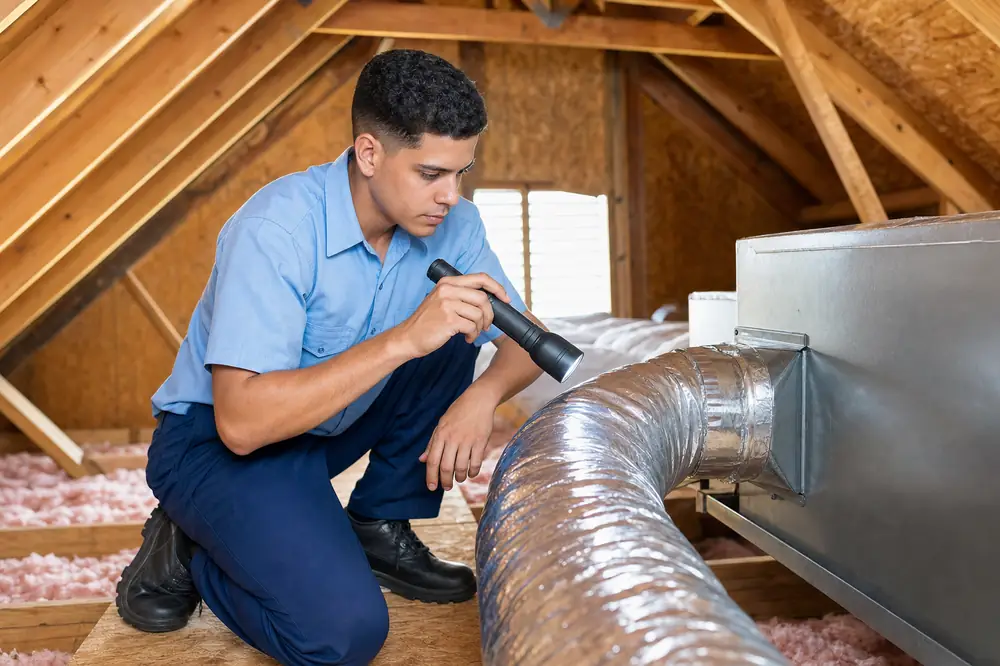
Remove a supply register and a return grille and look in with a flashlight. Heavy buildup, debris or construction dust inside is a reason to clean. A clean interior with poor airflow points elsewhere.
We start every air duct cleaning visit with that look, so the recommendation matches what is actually inside.
Step 4: Know what a proper cleaning involves
- Protect the house and set up negative pressure on the duct system
- Loosen debris inside supply and return runs with brushes or air tools
- Collect it through the system so it does not spread into the rooms
- Clean registers, grilles and the return plenum
- Inspect the blower and coil, which collect the same dust
- Install a fresh filter
A cleaning that skips the return side or the blower leaves a lot of the dust where it was.
Step 5: Fix what let the dust in
If dust is getting into the ducts through leaky returns, it will come back. Sealing those leaks after cleaning keeps the inside clean much longer.
Don't: clean ducts that are torn or disconnected and leave them that way. Repair comes first.
Sealing is especially worthwhile on return ducts that run through the attic or a garage, because those are the runs that pull in the dustiest air.
Step 6: Check the coil and blower too
The indoor coil and the blower wheel collect the same dust as the ducts, and they affect the system more. A coated blower wheel moves less air; a matted coil cools less and holds moisture. Cleaning the ducts while leaving those dirty only moves the problem.
That is why a proper cleaning includes an inspection of both, and a tune-up cleans them as needed.
Step 7: Watch for red flags in an offer
- A recommendation made before anyone looked inside your ducts
- Claims about what cleaning will do for the people in the house
- Chemical treatments added as standard
- No mention of the return side, the blower or the coil
A sound recommendation comes after an inspection, says what will be cleaned, and is honest about what cleaning cannot fix.
Step 8: Time it around renovations and moves
If you are remodeling, clean after the dusty work is finished, not before. During the work, cover the returns and switch the system off while drywall is being cut or sanded.
When you move into a home with an unknown history, an inspection of the ducts, the coil and the blower is a sensible first step, and it tells you whether cleaning, sealing or nothing at all is needed.
What to tell us when you call
- Why you are thinking about duct cleaning (dust, smell, renovation, pests)
- Whether any work was done in the house recently
- What you see inside a register or return
- Whether some rooms are also hot or have weak airflow
- Where the ducts run
How to avoid it next time
The filter is the main defense: change it on schedule and make sure it fits its slot without gaps. During renovations, cover the returns and switch the system off when dust is flying.
Sealed return ducts keep attic dust out, so the inside stays clean between cleanings.
Key takeaways
- Cleaning helps after construction, pests or heavy debris.
- It does not fix leaks, crushed ducts or weak airflow.
- Look inside first; recommend second.
- Seal leaky returns so the dust does not come back.
Further reading
- Should You Have the Air Ducts in Your Home Cleaned? U.S. Environmental Protection Agency
- Duct Sealing ENERGY STAR
Questions
How often should ducts be cleaned?
There is no fixed schedule. Clean when there is a reason: renovation dust, pests, or visible buildup inside.
Will duct cleaning help with a musty smell?
Sometimes, if debris inside is the source. A musty smell often comes from the coil, the drain pan or high humidity instead, so those get checked too. See our humidity guide.
Can duct cleaning damage my ducts?
Done carelessly on old flexible duct, it can. That is why we inspect the condition first and use methods that suit it.
Do I need to leave the house during the cleaning?
No. The system is put under negative pressure so the dust is collected instead of blown into the rooms.